
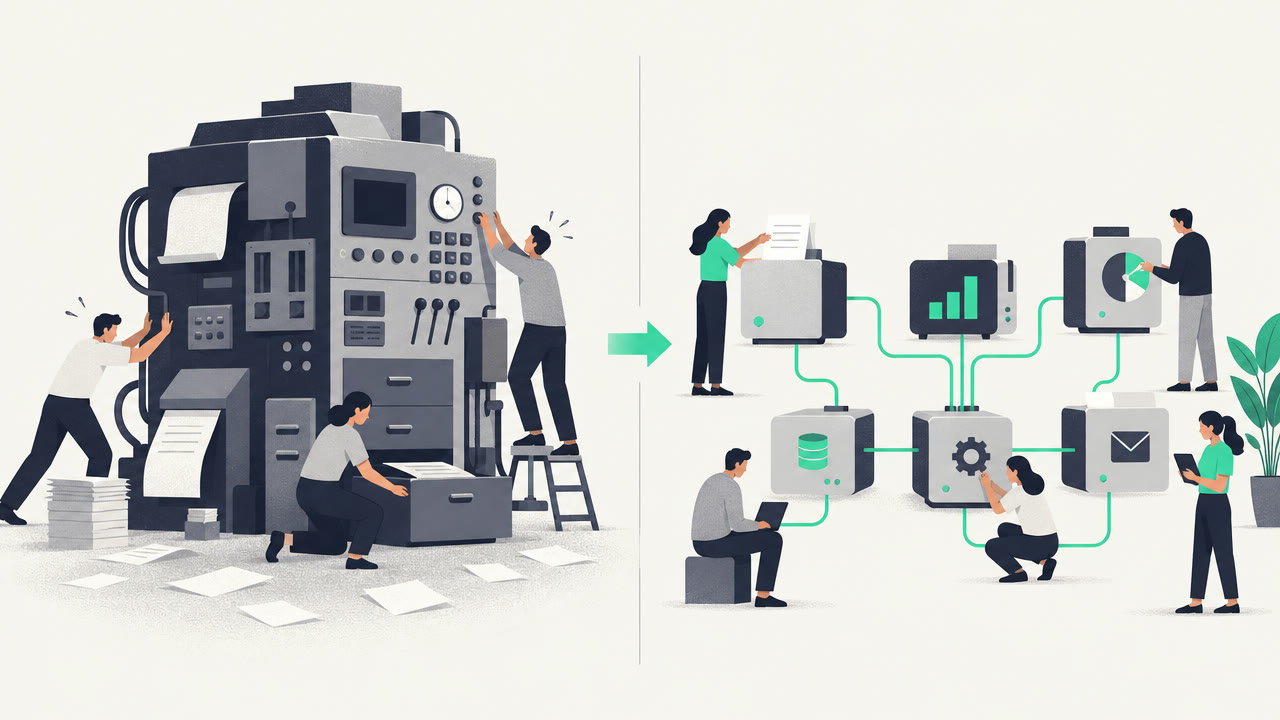
In HR Tech, two philosophies clash hard in the search for workforce management technology: "all-in-one" software versus specialized, integrated solutions.
On one side, integrated platforms such as BambooHR, Factorial or Buk promise to be the main system, or even the only one, for managing the workforce, with a wide range of modules.
On the other side are specialized solutions, designed to integrate with each other, where each piece brings a unique capability closely adapted to a region or industry.
The challenge of being everything to everyone
Building a system that covers every capability needed worldwide is a huge challenge. Each geography has its own work culture, its own legislation and its own level of technology adoption.
That raises costs and makes it hard to build a single product that fits every setting. It can appeal to large corporations looking to consolidate vendors, but it is less viable for small and medium companies, where flexibility is key.
Talent management is tied to the business
Talent management is tied to the core of each business. Every company has unique processes, shaped by its industry, its size and its culture.
That diversity demands a flexibility that standardized software rarely offers. By trying to cover every base, its specific functions often lack the depth and customization of a specialized solution.
Our vision: integrated specialization
At Aindez we believe the future of talent management is automated, integrated and conversational.
That means betting on specialized solutions that connect to each other. The cost of building a system focused on one function and adapted to one region is falling fast, and today in Latin America there are specialized solutions for almost any need.
"All-in-one" systems, on the other hand, even with plenty of capital, have to prioritize standardized features for a broad audience.
How could they become more flexible?
- Modular pricing. If customers paid only for the modules they use, integrated platforms would have to become specialists.
- Opening up to integrations. Strengthening their APIs to connect with other systems and make the most of each one.
What to weigh
The question remains open and depends on each company's needs, budget and strategy. But if you are evaluating an "all-in-one", consider this:
- Too many features: the software becomes cumbersome with features almost nobody uses.
- Lack of depth: shallow features that don't solve the problem.
- Learning curve: slow and costly implementations.
- Slow adaptation: innovation arrives late.
- Lock-in: fewer systems you can integrate.
Is it worth giving up flexibility, specialization and agility? The answer lies in your priorities.
Originally published in Spanish in Aindez News, Aindez's LinkedIn newsletter, on March 26, 2025.
Get the Aindez blog in your inbox
Get every new post in your inbox.

Manuel Vallejos · Founder and CEO of Aindez, the AI orchestration layer for companies that manage employment at scale.